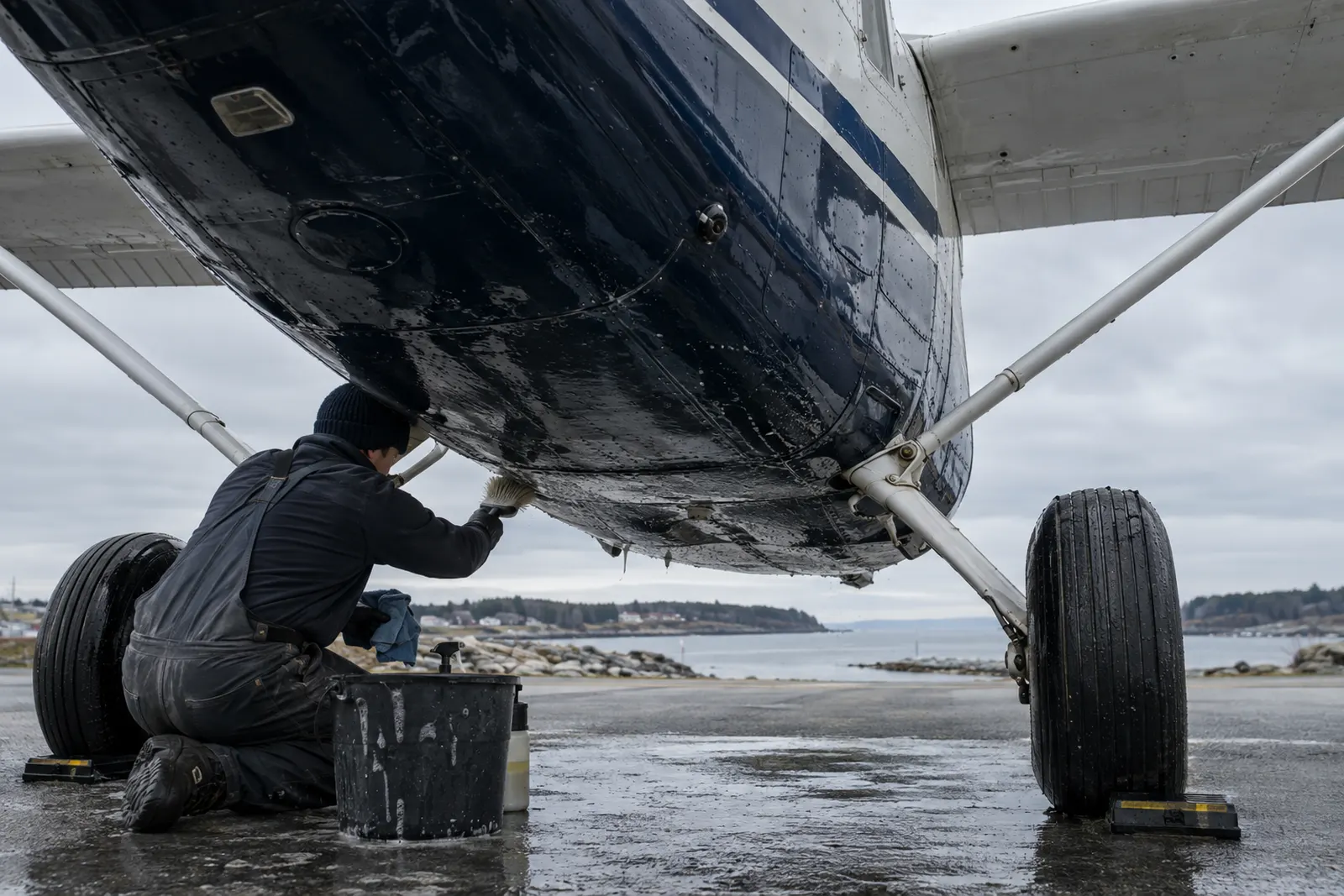
What's included in an exterior wash
- Fuselage, wings, tail and control surfaces washed and dried by hand
- Bugs removed from leading edges, props and spinners (cosmetic only)
- Belly and landing gear degreased with an aviation-safe cleaner
- Windshield and windows cleaned with acrylic-safe plastic cleaner
- Pitot and static ports covered during the wash and checked afterward
Why rinseless works on airport ramps
Most Boston-area fields don't have a wash rack, and many FBOs don't allow hoses or runoff on the ramp. A rinseless wash uses a polymer solution and plush microfiber in a two-bucket method. The solution surrounds the dirt so it lifts off instead of scratching the paint, and nothing needs to be rinsed away.
How often to wash
Aircraft based near the coast, at fields like Beverly, Marshfield and Plymouth, pick up salt film and benefit from a wash every few weeks in season. Inland aircraft usually need one after heavy bug season, after an inspection, or before a trip or sale.
What we need from you
The tail number, where the aircraft is parked, your takeoff date and time, and a photo if the belly or leading edges are especially dirty. That's enough for a firm price.
Common questions
Will a rinseless wash scratch my paint?
Not when it's done correctly. The polymer solution lubricates and lifts dirt, and we use fresh microfiber for each section with a separate rinse bucket so grit isn't dragged across the surface.
How long does an airplane wash take?
A four-seat single usually takes one to two hours. Twins, turboprops and heavy belly grime take longer. You'll get a time window with your quote.
Can you wash in the hangar?
Yes. Because nothing is rinsed off, rinseless washing is well suited to hangars when the weather is bad or the FBO prefers it.